
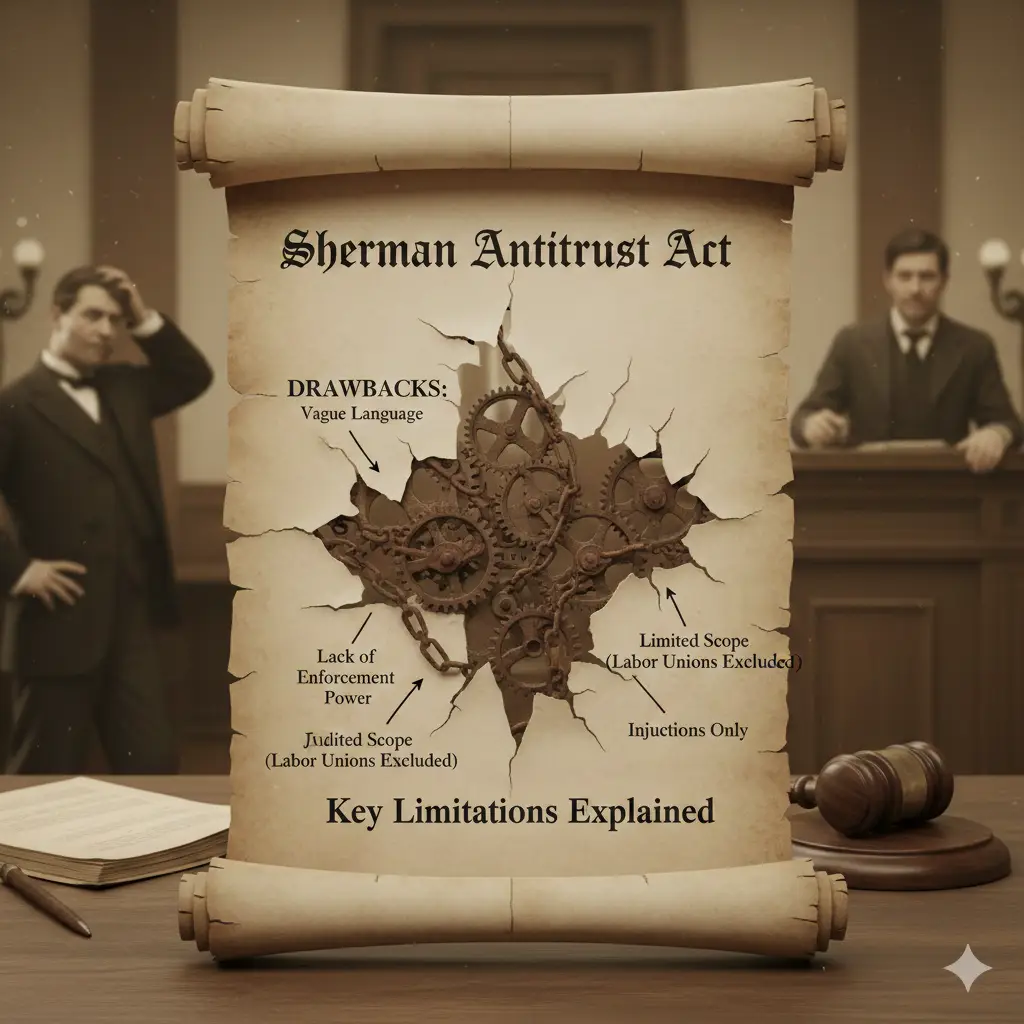
Students and history fans often ask What Was A Drawback Of The Sherman Antitrust Act when studying U.S. economic laws. The Sherman Antitrust Act of 1890 aimed to stop big companies from controlling markets. It banned trusts and deals that hurt competition. But the law had big problems from the start. Its words were too vague, making it hard for courts to use. Enforcement was weak with no strong agency to push cases. Early judges often sided with businesses. These issues let monopolies grow for years. Later laws fixed some problems. This guide explains the main drawbacks in easy words. We look at history and examples for a clear view.

Background of the Sherman Antitrust Act
The Sherman Antitrust Act passed in 1890 during the Gilded Age. Big trusts like Standard Oil controlled prices and hurt small firms. Senator John Sherman led the push for fair play. The law said no contracts or combos in restraint of trade. No monopolizing any part of commerce. It was the first federal step against trusts. President Harrison signed it with wide support. But no one knew how weak it would prove early. The act had good goals but poor tools. This background shows why drawbacks mattered. Many hoped it would break trusts fast. But reality is different.
What Was A Drawback Of The Sherman Antitrust Act: Vague Language Issues
One big answer to What Was A Drawback Of The Sherman Antitrust Act is vague words. Terms like “restraint of trade” or “monopolize” have no clear meaning. Courts argue long what is illegal. This lets companies find loopholes easily. In E.C. Knight case 1895 court said manufacturing not commerce. So sugar is safe. The vague language made enforcement hard. Judges interpret different ways. Some strict, some loose. This inconsistency hurts law power. Many cases are dismissed for no clear proof. The drawback is that trusts grow more. Later Clayton Act added specific bans to fix.

Weak Enforcement as a Major Drawback
Another key to What Was A Drawback Of The Sherman Antitrust Act is weak enforcement. No agency to investigate or push cases. The Justice Department handles but low staff and funds. Presidents early on have no strong will to bust trusts. Few cases in the first decade. When trying, they often lose court. This weak push let monopolies thrive. Businesses know low risk to break the law. The enforcement drawback is big for years. Theodore Roosevelt later used strong use. But early on no teeth in law. This show needs a dedicated body. FTC came 1914 for help.
Court Interpretations That Limited the Act
Courts early limit the act’s power. The rule of reason in 1911 says only unreasonable restraint is bad. This gives companies room to argue well. Many trusts say efficiency does not harm. The interpretation drawback favors big business. Judges from the era are often pro industry. This slow trust busts long. Standard Oil broke in 1911 but after years of fighting. The court view makes law less sharp. Many see it as protecting monopoly and not stopping. This judicial drawback is key to history. Later shifts help but early big issues.

Misapplication Against Labor Unions
Strange drawback is use against unions not trusts. Courts say strikes restraint trade. This hurt workers’ organization. Loewe v. Lawlor 1908 applied to boycott. The misapplication opposite goal. Law meant to stop company power but hit labor. Unions are exempt from the Clayton Act. This wrong use shows vague danger. Many call it an ironic twist. The drawback is anger workers. It delays fair labor long.
How Later Laws Fixed Sherman Act Drawbacks
Clayton Act 1914 and FTC Act fix many issues. Clayton banned specific things like price discrimination. FTC agency investigates fair. This adds teeth missing early. The fixes make antitrust strong. Roosevelt and Taft use Sherman more. But early drawbacks are clear. Wilson pushed new laws. This evolution shows us to learn from a weak start. The latter helps real bust trusts.
Impacts of the Sherman Antitrust Act on Labor Unions
The Sherman Antitrust Act had an unexpected negative impact on labor unions. Courts applied the law to strikes and boycotts, viewing them as restraints of trade. This hurt workers trying to organize for better pay and conditions. In the Danbury Hatters case of 1908, a union boycott led to big fines under the act. Unions felt the law favored big business over workers. This misuse slowed labor movement growth in early years. Congress later fixed this with the Clayton Act in 1914, exempting unions. The impact showed how vague laws can turn wrong. Many workers suffered before change came. This history teaches careful word choice in laws.
Role of Presidents in Sherman Act Enforcement
Different presidents changed how the Sherman Act worked. Early ones like Harrison and Cleveland used it little. The McKinley era saw almost no cases. Then Theodore Roosevelt earned the “trust-buster” name with many suits. He broke Northern Securities in 1904. Taft continued with more cases than Roosevelt. Wilson pushed stronger laws. The president plays a big role in enforcement power. Weak will mean weak law. This variation shows the executive branch key. Many see Roosevelt shift as a turning point. The role affected drawback strength over time1.
Comparison With Later Antitrust Laws
Later laws fixed Sherman Act flaws. The Clayton Act 1914 banned specific acts like price discrimination. It stopped stock buys to monopolize. The FTC Act the same year made agencies watch unfair methods. These added clear rules and teeth missing before. Sherman broad but vague. New ones specific and strong enforce. The comparison shows progress in policy. Many credit the Wilson era for real change. Clayton helped labor too. This built on the Sherman base better. The later laws made antitrust work real.
Economic Context of the Sherman Act Era
The Gilded Age set stage for the Sherman Act. Big trusts like Standard Oil controlled 90 percent markets. Railroads fixed prices high. Small firms have no chance to compete. Farmers hurt from high ship costs. Public anger grew loud. Populist movement pushed fair play. The economic context is full of inequality. Sherman Act response to this. But drawbacks let problems last. Trusts dissolve slowly. The era shows law needs to be strong to match power. Many books cover this time in rich detail. Context helps see why acting is needed but weak2.
Modern Relevance of Sherman Act Drawbacks
Today the Sherman Act is still the basis for antitrust. Cases against tech giants use it. Drawbacks like vagueness teach clear laws. FTC and DOJ are stronger now. The modern view sees early weakness as a lesson. Courts are less pro business strict. Global trade adds new challenges. The relevance lives in ongoing fights. Many studies act on current policy. Drawbacks remind me of perfect law hard first try. This history guides today’s rules.
Study Tips for Learning About the Sherman Antitrust Act
Study the Sherman Act with a timeline first. Note pass 1890 and key cases. Compare with Clayton for fix. Read Roosevelt trust bust stories. Make chart drawbacks and solutions. Quiz self on vague language examples. Watch short videos for visuals. Group discussion with class. The tips make learning stick. Many students ace tests this way. Understand the context of the Gilded Age key. This fun way to grasp history. Tips help all levels well.
Legacy and Modern View of Sherman Act Drawbacks
Today we see the Sherman Act start to be important but flawed. Drawbacks need clear words and strong enforcement. Modern cases use big tech. The legacy mixed success. Early weak but base for all antitrust. Many study for policy lessons. The drawbacks do not end but shape better law.
FAQs on What Was A Drawback Of The Sherman Antitrust Act
What Was A Drawback Of The Sherman Antitrust Act?
What Was A Drawback Of The Sherman Antitrust Act main vague language. No clear definition of restraint or monopoly. This hard enforcement is consistent. Courts interpret differently. Companies loophole easily. The drawback is that trusts grow early.
Why is enforcement weak for the Sherman antitrust act?
Enforcement is weak , no agency dedicated. Justice low funds staff. Presidents early on push hard. Cases few and often. The weak big drawback is first years.
Did courts limit the Sherman antitrust act?
Yes courts limit with rule reason. Only unreasonable bad. This gives business room to argue. Early judges pro industry. The limit slows trust bust.
Was the Sherman act used wrong on unions?
Yes, the Sherman antitrust act used on union strikes. Courts say restraint trade. This opposite goal hurt workers. Clayton fixes the exemption later.
How fix Sherman antitrust act drawbacks?
Clayton 1914 specific bans. FTC agency enforcement. This fix is vague and weak. Later strong use.
Conclusion
What Was A Drawback Of The Sherman Antitrust Act includes vague words that enforce court limits. These let monopolies last longer. But the act started an important fight. Later laws build better. History shows learn from flaws.What drawback of What Was A Drawback Of The Sherman Antitrust Act surprises you most3?