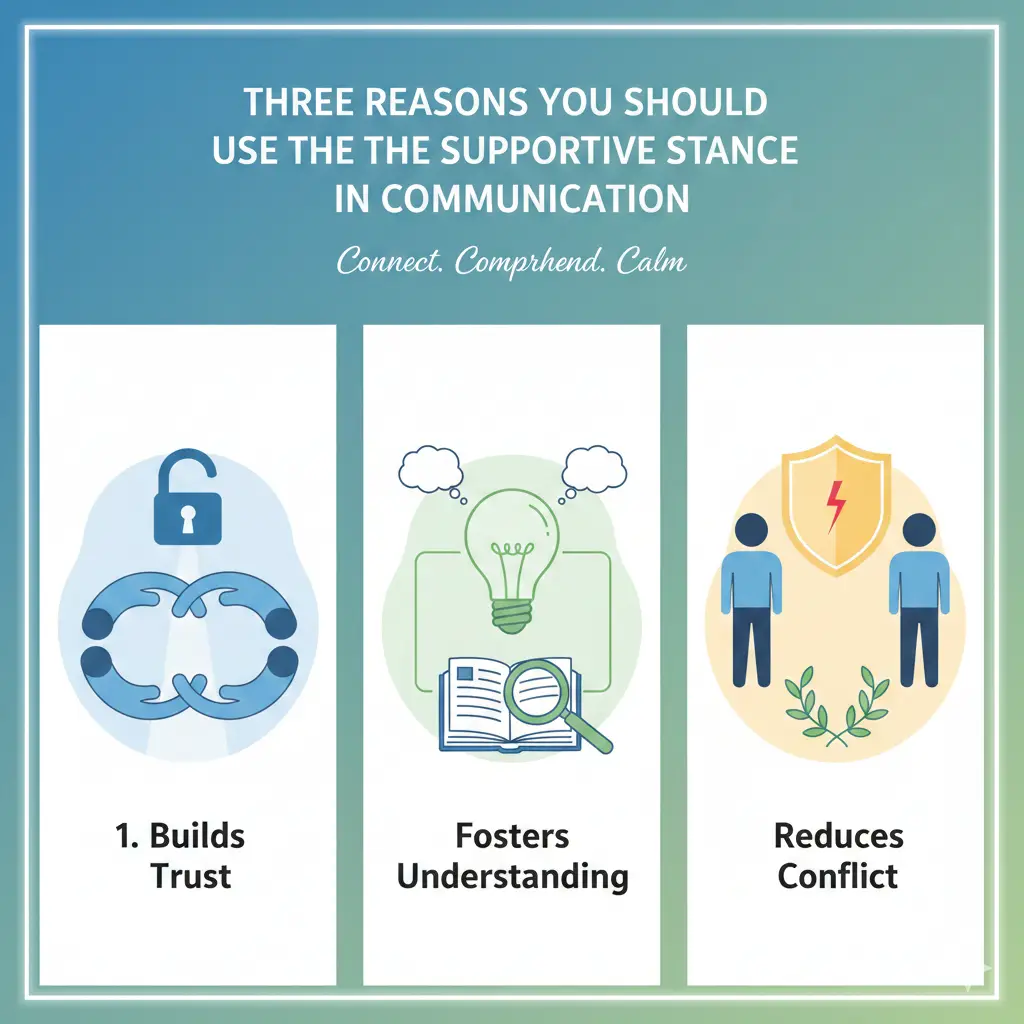
Many students and learners ask to Describe Three Reasons You Should Use The Supportive Stance when talking to others. The supportive stance is a way to stand or sit that shows you are open and kind. You face the person with arms down and body relaxed. This helps in talks like counseling or daily chats. It makes the other feel safe and heard. The stance comes from psychology to build trust. Experts say it cuts bad feelings and opens up good talk. This guide gives three clear reasons in easy words. You learn how it works and why you should try it. The reasons help in school, work, or home.
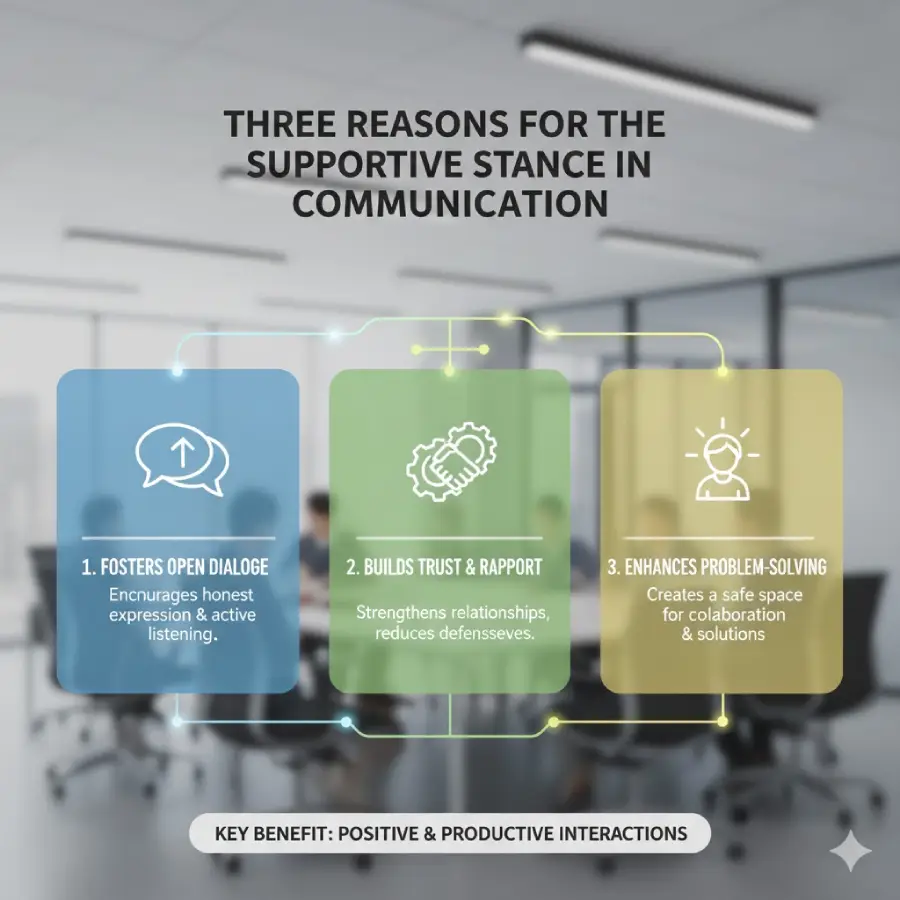
Examples of Supportive Stance in Everyday Situations
The supportive stance works well in daily life too. When a friend shares a problem, sit open face them. Arms down lean slight in. This shows you care and listen fully. In family talk, use it to calm fights. Kids feel safe sharing with parents open poses. At work, meeting the boss or team’s open stance builds trust. No cross arms look mad. Many see talks go smoothly with this. The examples show real use easy. Practice home first then out. This makes all chats better.
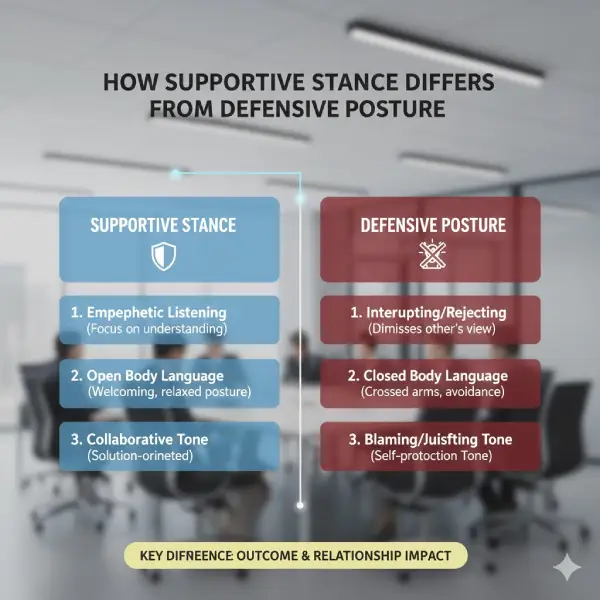
How Supportive Stance Differs from Defensive Posture
Defensive posture opposite supportive. Cross arms turn away and look down. This feels guard or no care. Others shut down talk. Supportive open relax invite words. They differ a lot in feel. Defensive raises the threat level. Supportive lower it. Many mix up habits. Learn to spot your own pose. Change to open for good. This difference is key for better ties. Experts teach switching from defensive to supportive. The change helps fast.
Role of Eye Contact in Supportive Stance
Eye contact adds power to a supportive stance. Soft, kind eyes show real care. No stare hard or look away much. Balance look and blink normally. This role makes connections deep. Others feel seen and heard. In counsel eye key for trust. Many shy people look down at the lost link. Practice holding a gentle gaze. The role ties body to heart. Good eyes with an open pose best. This makes words land soft.
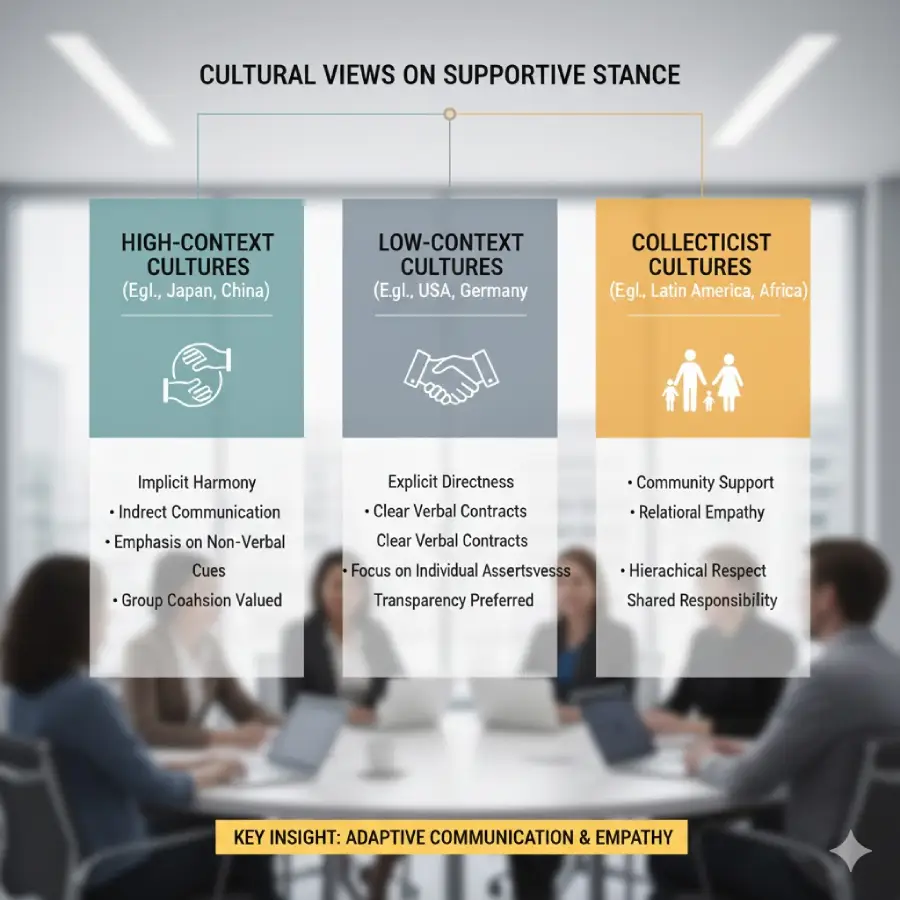
Cultural Views on Supportive Stance
Culture changes how supportive stance is seen. Some places direct eye rudeness. Bow or side pose show respect. West open face normal care. Learn culture for the right use. In mix groups adjust soft. The views differ but the goal has the same safe feel. Many travelers learn this. Supportive stances adapt easily. This cultural care helps world ties. No one way all. The views are rich for understanding.
Supportive Stance in Professional Helping Roles
Help roles like nurse or teacher use supportive stances. Patients or students feel safe and open. Body open says I am here for you. No rush poses in a calm room. Many train this skill first. The professionals use big for good outcomes. Heal or learn faster and feel safe. Experts say stance part tool kit. This role is key in care jobs. The stance helps heal words and land.
Common Mistakes with Supportive Stance
Common mistakes hurt a supportive stance. Leaning too far seems push. Arms loose but fidget look nervous. Fake smiles feel real. Stand too far from the cold. The mistakes are easy to fix with awareness. Practice calm naturally. Mirror helps see self. Many start stiff then soft. This common learning curve. No perfect first try. The mistakes teach better ways.
Benefits for Your Own Well-Being Using Supportive Stance
Using a supportive stance helps you too. An open pose calms my mind. Less stress in hard talks. Feel strong, no guard. The benefits for myself are big. Many say feel more confident. The body relaxes and the mind follows. This well-being boost is quiet. Use it for peace. The stance is two way good.
How to Teach Supportive Stance to Others
Teach a supportive stance in a simple way. Show first your pose. Ask for a copy and feel. Talk how others see. Role play talks good bad pose. Give kind feedback. They teach easy for kids or adults. Many classes use this. Group practice is fun learning. This is how to spread good talk. Teach one help many times. The simple way to share joy.
What the Supportive Stance Looks Like
The supportive stance is simple. Stand or sit facing the person. Keep arms at sides or loose. Lean slightly forward to show care. Head level eyes are soft. No cross arms or turn away. Feet plant even no shift. This looks open with no threat. Many learn in class for help roles. The stance matches the word kind. A bad stance like an arms cross feels close. Good one invites talk free. Practice mirrors to see. This base is strong for reasons. The look calms others fast.
Describe Three Reasons You Should Use The Supportive Stance: First Reason – Shows Respect
The first reason to Describe Three Reasons You Should Use The Supportive Stance is it shows respect. An open body says I value you and listens. Cross arms or back turn feels no care. Supportive ways face full and lean in show time for you. This respect builds trust quickly. In talking others open more. Studies show open poses are seen as friendly. Many feel heard with this. The reason key for good ties. Use in friend or work meetings. Respect starts all well1.
Second Reason – Makes the Other Person Feel Safe
The second reason to Describe Three Reasons You Should Use The Supportive Stance is that it makes you feel safe. Closed poses like arms folded can seem guard or mad. Open stance no threat look. Body relaxation says no harm here. This safe feeling lets us share deep. In help talks like counsel is a big need. Experts call it a non threat pose. Many are shy and open with safe signs. The reason is that hard talks are soft. Use when listening problems. A safe feeling opens the heart easily.
FAQs on Describe Three Reasons You Should Use The Supportive Stance
Describe Three Reasons You Should Use The Supportive Stance?
Describe Three Reasons You Should Use The Supportive Stance first and show respect in an open way. Second, safety feels no threat. Third, open talk flows freely. These build trust and good ties. Use it for better chats daily.
Why do supportive stances show respect?
A supportive stance shows respect, face full and arms open. This says I care to listen to you. No close pose like cross arms. The show value person words. Respect key starts good talk.
How does a supportive stance make you feel safe?
A supportive stance makes it safe with a relaxed body and no guard. Lean in soft eyes kind. No turn away or fold arms. The safe lets share no fear. Good for hard feelings.
Does a supportive stance help open communication?
Yes, a supportive stance helps open with safe respect. Others talk freely.2 No hide or fear. This solves issues better. They help big in all ties.
When to use a supportive stance?
Use a supportive stance, listen or help talk. Friend share or work team. Counsel or teach best. When I need trust open. Daily practice is good.
Conclusion
To Describe Three Reasons You Should Use The Supportive Stance shows respect, safe feeling and open talk. These three make strong ties and chat well. Practice is easy for all. Use daily for a better life. The stance is simple but power big.What do you try first to Describe Three Reasons You Should Use The Supportive Stance3?