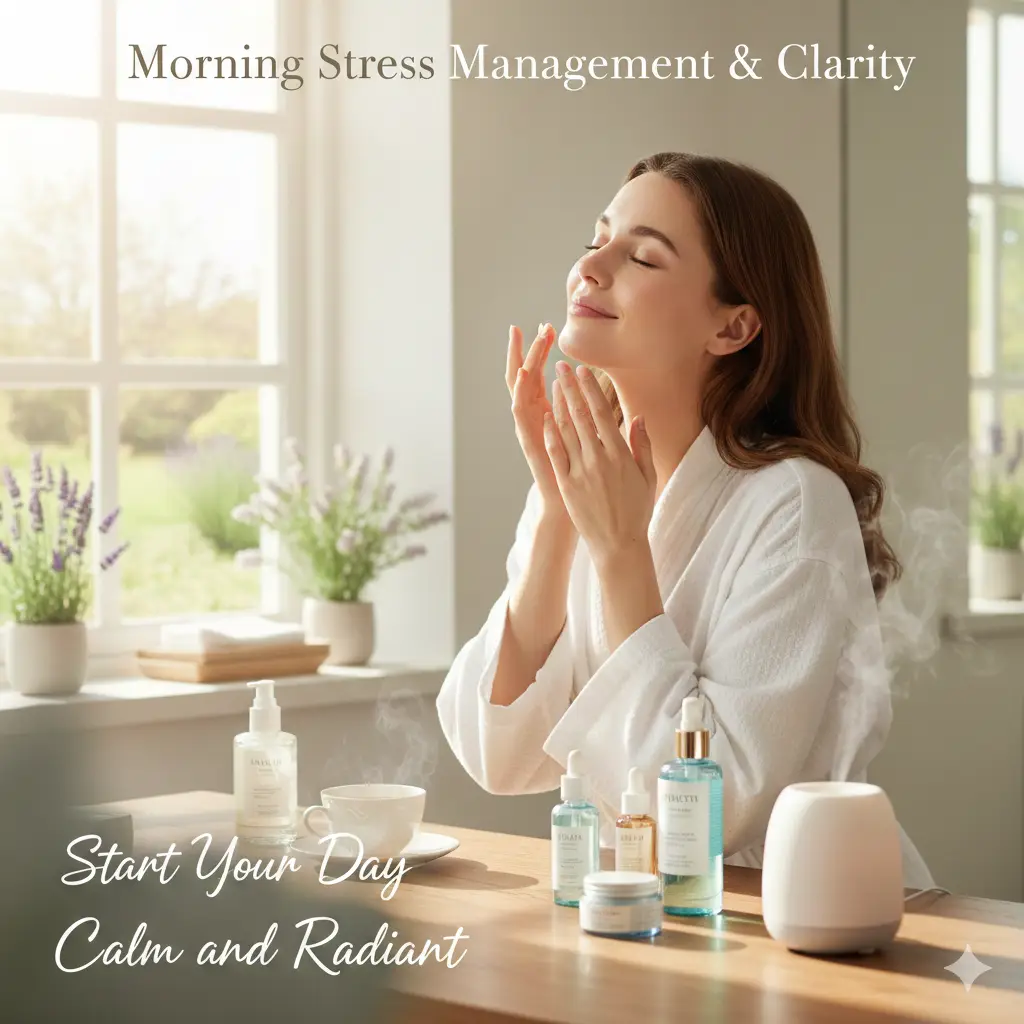
You can start to how to practice mindfulness daily without using meditation apps today. It is simple and fits into your normal day. Mindfulness means you pay full attention to what is going on right now. You do it without judging things as good or bad. This helps you feel less stress. It can make worry go away. You may feel happier and healthier.
Many people think you need phone apps or long quiet time to do mindfulness. But that is not true. You can do it with easy steps like watching your breath or really tasting your food. These small actions bring big peace. Studies show that even 10 minutes each day can help a lot. It can make your mood better. It lowers anxiety. It helps you sleep and focus more.
Experts from the Mayo Clinic say anyone can learn these basic steps. No special tools are needed. This long guide gives you many proven ways to make mindfulness part of your life. You will find step-by-step help, examples, and tips. Let’s begin your journey to a calmer mind.
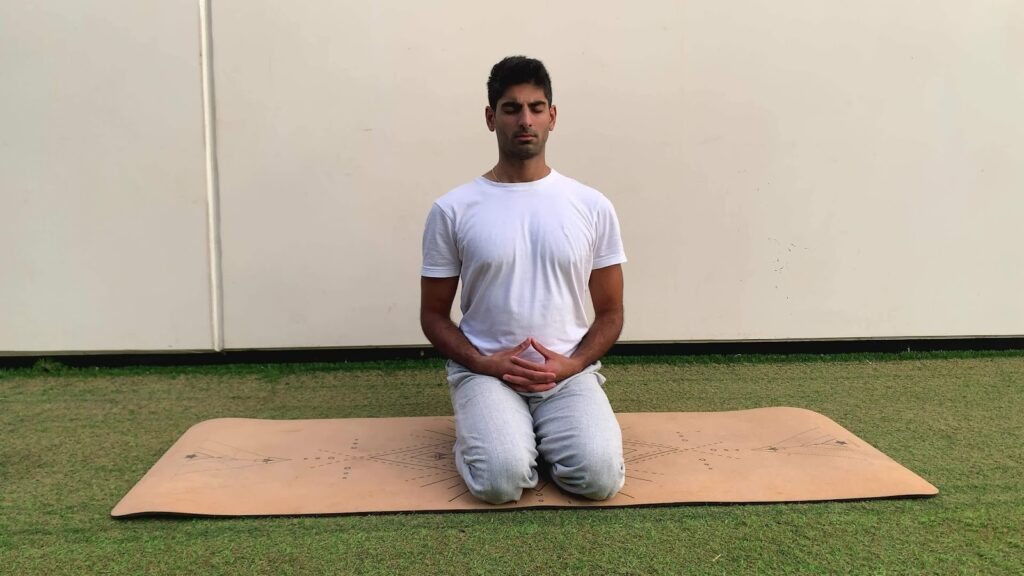
These pictures show people breathing deeply outdoors. It is a simple way to feel calm in nature.
What Mindfulness Really Means
Mindfulness is about being here now. It comes from old ways of thinking, like in Buddhism. But today, doctors and teachers use it to help people feel better.
When you are mindful, you notice your thoughts. You see your feelings. You feel your body. But you do not get stuck in them. You let them come and go like clouds in the sky.
Why do this every day? Because it changes your brain in good ways. Research shows it makes the part of your brain that handles stress smaller. It grows the part that helps you focus and feel happy.
One study found that people who did mindfulness for eight weeks had less pain and a better mood. Another big review looked at many studies. It said mindfulness cuts anxiety by a lot. It helps with depression too.
You do not need apps. Real life gives you many chances to practice. As the Mayo Clinic explains, just notice the world around you. This lowers stress fast.
People in online groups, like on Reddit, share how they do it without tech. They focus on breathing or daily tasks. It works great.
Start slow. Try one thing today. Build from there.
How to Practice Mindfulness in Daily Life Every Day
You can bring how to practice mindfulness in daily life into things you already do. Make normal tasks special by paying full attention.
Mindful Eating
Eat slow. Look at your food. See its colors. Smell it. Feel its texture in your mouth. Chew many times. Taste every bite.
This stops you from eating too fast. You enjoy food more. You may even eat less because you notice when you are full.
Try it with one meal a day. Put your phone away. Sit down. Eat without TV.
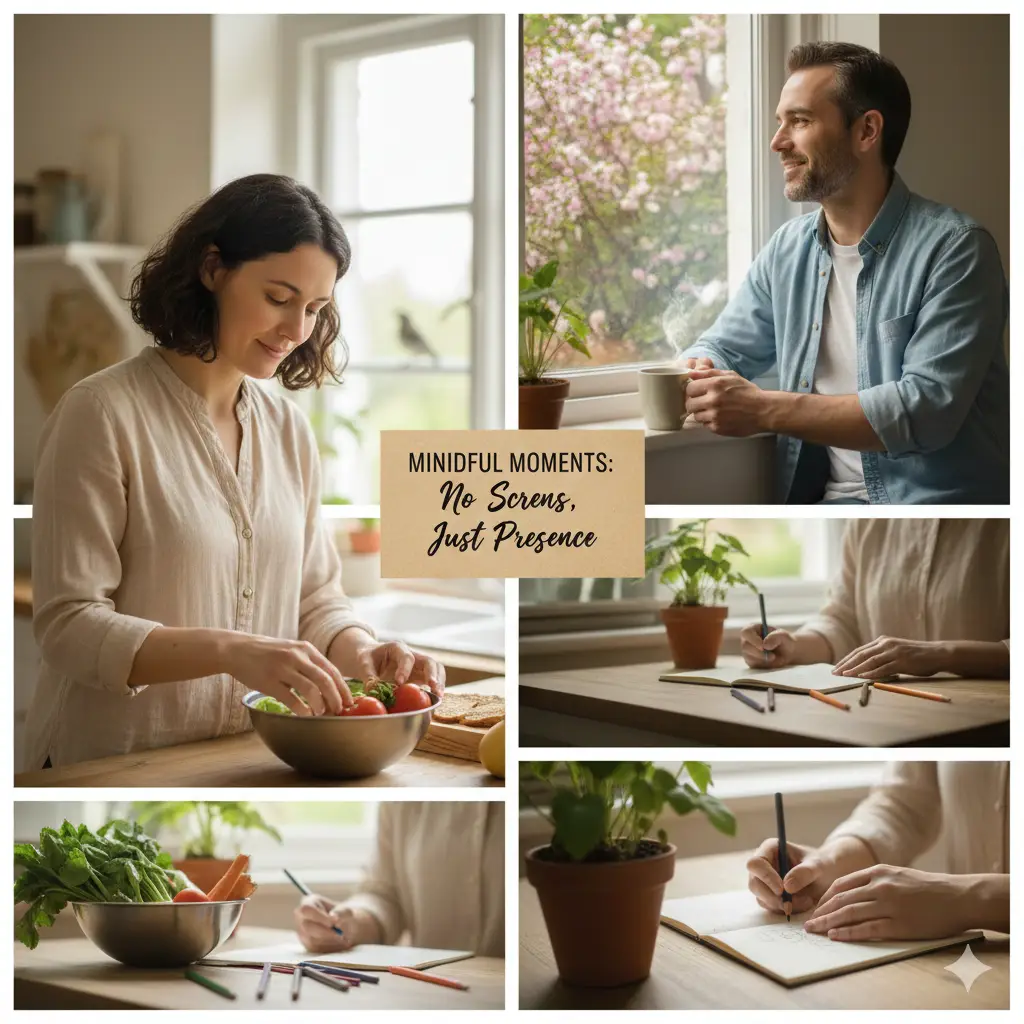
Look at these images. They show people really enjoying their food mindfully.
Mindful Walking
When you walk, feel your feet hit the ground. Notice how your legs move. Feel the air on your face. Hear sounds like birds or cars.
Walk slow on purpose. Go outside if you can. Even a short walk to your car counts.
This is great for breaks at work. It clears your head.
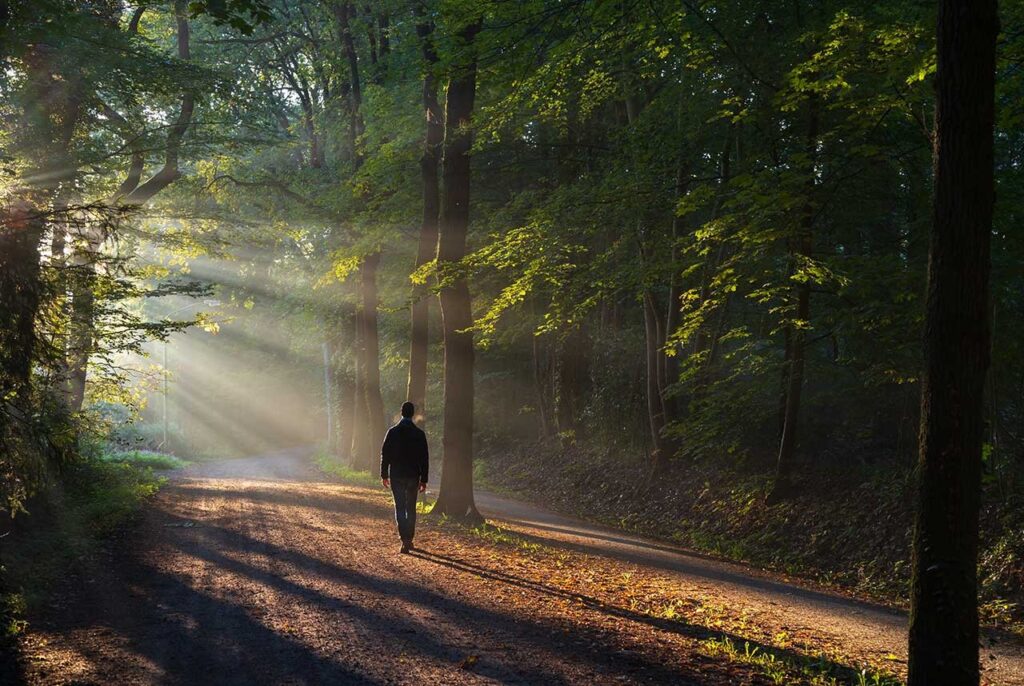
These photos capture mindful walking in nature. Feel the peace.
Mindful Chores
Wash dishes with care. Feel the warm water. See the bubbles. Smell the soap.
Fold clothes slowly. Notice the soft fabric.
These tasks become calm instead of boring work.
Add more like brushing teeth. Feel the brush. Taste the paste.
These small changes make your whole day more peaceful.
Quick Mindfulness Activities for Adults When You Are Busy
Life is fast. You need quick mindfulness activities for adults that take little time.
The Five Senses Game
Stop and name:
- 5 things you see
- 4 things you touch
- 3 things you hear
- 2 things you smell
- 1 thing you taste
This brings you back to now fast. It stops racing thoughts. Great when you feel upset.
Three-Minute Breathing Break
- Sit down. Notice how you feel for one minute.
- Focus on your breath for one minute. Feel it go in and out.
- Feel your whole body for one minute.
Do this at your desk or in line.
Look at One Thing Closely
Pick a leaf, flower, or object. Look at it for five minutes. See colors, shapes, lines. No words needed.
This trains your mind to stay focused.
Try these when stress comes. They work quickly.
Easy Mindfulness Exercises for Adults to Do Alone
Here are more mindfulness exercises for adults you can do by yourself.
Body Scan
Lie down or sit. Close your eyes if you like.
Start at your toes. Notice how they feel. Are they warm? Tight?
Move up slowly: feet, legs, belly, arms, head.
If a spot hurts, breathe into it. Relax it.
This helps you find tension and let it go. Good before bed.

See these images of body scan relaxation.
Breath Watching
Sit comfy. Watch your breath. Feel air come in your nose. Feel your belly rise.
When thoughts come, note them. Go back to breath.
Count breaths to 10 if it helps. Start over if you lose count.
Do this for 5 to 10 minutes.
Raisin or Fruit Exercise
Take one small food, like a raisin.
Hold it. Look closely. Touch it. Smell it.
Put it in your mouth. Do not chew yet. Feel it.
Then chew slowly. Taste fully.
Pretend you never ate it before.
This shows how we miss tastes when we rush.
These exercises build strong awareness. Do one each day.
Ideas from Mindfulness Exercises for Groups PDF for Your Own Use
Many mindfulness exercises for groups pdf are good for one person too.
Mindful Listening
Listen to someone talk. Focus only on their words. Notice their tone. See their face.
Do not plan what to say next. Just hear.
If alone, listen to sounds around you. Birds, wind, traffic.
Mindful Looking
Look out a window. See things move. Colors change.
Do not name them. Just see.
Sharing Thanks
Think of three good things today. Say them out loud or write them.
Feel the happy feeling.
These help you connect better, even alone.
A Short 2 Minute Mindfulness Exercise PDF Style Break
Need super fast? Try this 2 minute mindfulness exercise pdf like practice.
- Pause what you do.
- Sit or stand still.
- Ask: How do I feel now? Notice thoughts, body, feelings.
- Breathe deep six times. Feel the air move.
- Feel your whole body touch the chair or ground.
- Open eyes slowly.
Do this many times a day. It resets your mind.
Mindfulness Activities for Students That Work for Everyone
Mindfulness activities for students help kids focus. Adults like them too.
Focus on One Sound
Listen to a bell, music, or nature sound. Stay with it.
Let other thoughts go.
Watch Thoughts
Sit quietly. Breathe. See thoughts come like clouds.
Do not grab them. Let them float by.
No good or bad. Just watch.
This helps when your mind is busy.
More Tips for Deeper Practice
Want more? Try nothing.
When a thought comes, say in your mind “thinking” or “worry.”
Then let it go.
Or see yourself as the watcher. Thoughts are not you.
People on Reddit share these. They work without timers.
Find what you like best.
Make a Daily Habit Without Apps
To make how to practice mindfulness in daily life stick:
- Morning: Breathe in bed when you wake.
- Meals: Eat mindfully.
- Walks: Feel steps.
- Night: Body scan to sleep.
Do it every day. After months, it feels easy.
The Mayo Clinic says practice six months for big change.
Write notes on what you try. See how you feel.
No app needed. Use a paper journal.
Problems You May Have and Fixes
Your mind wanders. That is okay! Everyone does.
Just bring it back gently. Don’t be mad at yourself.
No time? Do it during waits or chores.
Hard to feel present? Start with one thing, like hands touch.
Be nice to yourself. Kindness helps most.
If you feel strong emotions, that is normal. Breathe through them.
Talk to a friend or doctor if needed.
More Ways to Practice
Try mindful driving. Feel hands on the wheel. Notice the road.
Mindful shower. Feel water, smell soap.
Mindful talking. Listen fully. Speak slowly.
These add more calm.
Quotes to remember:
“Mindfulness is the aware, balanced acceptance of the present experience.” – Sylvia Boorstein
“The best way to capture moments is to pay attention.” – Jon Kabat-Zinn
FAQs About How to Practice Mindfulness Daily Without Using Meditation Apps
What exactly is mindfulness, and can I do it without meditating?
Mindfulness means paying full attention to the present moment. You notice your thoughts, feelings, and surroundings without judging them. Yes, you can practice it without formal meditation. Many ways include daily tasks like eating or walking. Sources like Mayo Clinic and Psychology Today say focusing on your body or senses works well.
How do I start to practice mindfulness daily without using meditation apps?
Begin small. Pick one easy activity, like watching your breath for 2-5 minutes. Or try mindful eating at one meal. Do it at the same time each day, like morning or before bed. Be gentle if your mind wanders—that is normal. Start with 5 minutes and grow from there.
What are some quick mindfulness activities for adults when I’m busy?
Try the five senses exercise: Name 5 things you see, 4 you touch, 3 you hear, 2 you smell, and 1 you taste. Or do a 3-minute breathing break. These take little time and calm you fast at work or home.
My mind wanders a lot. Is that normal, and what should I do?
Yes, everyone’s mind wanders! It is part of the process. Gently notice it and bring attention back to your breath or task. Do not get mad at yourself. Kindness helps you improve over time.
How long do I need to practice each day to see benefits?
Start with 5-10 minutes. Studies show even short daily practice lowers stress and improves mood. After weeks or months, you may feel calmer and more focused1.
Conclusipoon
In conclusion, you now have many ways to how to practice mindfulness daily without using meditation apps. These easy steps fit your life. They bring less stress, more joy, and better focus. Science backs them. Start with one today. Be patient and kind. Your mind will thank you. What simple practice will you try first right now2?
References
- Reddit Meditation Community Discussion – Users share real tips on doing mindfulness without apps, like breath focus and daily tasks. Good for beginners who want no-tech ideas. ↩︎
- PositivePsychology.com Mindfulness Exercises – Lists many activities for adults, groups, and kids. Backed by science for lower stress. ↩︎