
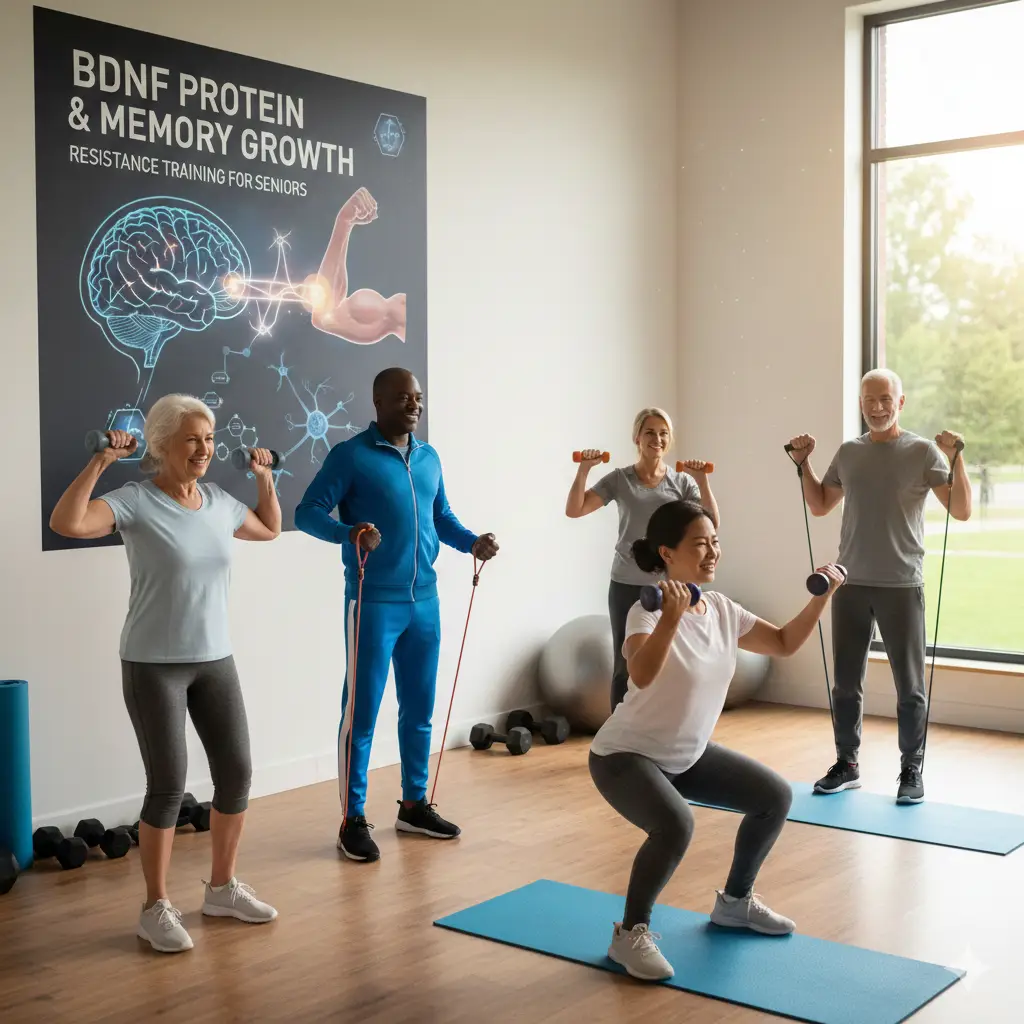
Resistance training for BDNF protein and memory growth in seniors is a simple yet powerful way to keep your mind sharp as you get older. Many people over 60 notice small changes, like forgetting where they put their keys or struggling to recall names. These changes happen because the brain slows down a bit with age. But you can fight back with strength exercises. Lifting light weights, using resistance bands, or even doing bodyweight moves helps your muscles grow stronger. At the same time, it boosts a special protein in your brain called BDNF.
What is BDNF? It’s like plant food for your brain cells. It helps them grow new connections and stay healthy. Higher BDNF levels mean better memory, quicker thinking, and even a happier mood. Studies show that seniors who do regular bdnf and strength training see real improvements. They remember things better and feel more clear-headed.
This guide is for you if you’re a senior wanting to stay sharp, a family member helping a loved one, a doctor or therapist looking for safe advice, or a trainer working with older adults. We’ll explain the science in easy words, share proven exercises, and give tips to get started safely. You don’t need fancy equipment or a gym membership. Many moves work right at home.

Understanding BDNF: The Brain’s Best Friend
Let’s start with the basics. What is BDNF? BDNF stands for Brain-Derived Neurotrophic Factor. It’s a protein your body makes naturally. Think of your brain as a big network of roads. BDNF helps build and fix those roads. It supports new brain cells and strengthens links between them. This process is called neuroplasticity. It lets your brain learn new things and adapt.
As we age, BDNF levels often drop. This can lead to foggy thinking, poorer memory, and even sadness. Low BDNF is linked to conditions like dementia. But good news: You can raise your BDNF with exercise.
Bdnf and strength training work together well. When you push or pull against resistance, your muscles send signals to the brain. These signals tell it to make more BDNF. One study found that after strength workouts, BDNF levels jump up quickly. Over time, with regular training, levels stay higher.
Why focus on seniors? Aging naturally lowers BDNF. But resistance training for BDNF protein and memory growth in seniors can turn this around. Research on adults over 60 shows clear boosts. For example, a review of many studies saw BDNF rise by an average of 0.73 units after training programs.
Why Resistance Training Is the Best Exercise for BDNF
Not all exercises are the same for brain health. Walking is great for your heart, but the best exercise for bdnf in seniors is often resistance training. Why? It challenges muscles in a way that triggers big BDNF releases.
The impact of strength training intensity on brain derived neurotrophic factor is key. Moderate effort works best. That means lifting a weight that’s hard but not too hard – you can do 8 to 15 reps before needing a break. Too easy won’t do much. Too heavy can cause injury.
Programs with 2 or 3 sessions a week show the strongest results. One study had seniors do mixed training: some light weights with many reps, plus heavier sets. BDNF went up nicely, especially in men. Women also benefit, though responses can vary a bit.
Adding mental tasks makes it even better. This is called bdnf training with a twist. Count reps backward or name fruits while lifting. It engages the brain more.
Compared to no exercise, strength training wins for memory too. Seniors in programs recall lists better and solve problems faster.

How Strength Training Helps Memory and Fights Dementia
Memory growth isn’t just about BDNF. Strength training helps in many ways.
It increases blood flow to the brain. More blood means more oxygen and nutrients. The hippocampus – the memory center – gets a boost. Studies show less shrinkage in this area for active seniors.
Resistance training and dementia have a strong link. Regular sessions may lower risk by reducing inflammation. Inflammation harms brain cells over time.
Does weight training prevent alzheimers? It can’t guarantee prevention, but it helps a lot. People who strength train have lower chances of plaques building up. They also handle daily tasks better longer.
Real stories inspire. Many seniors say they think clearer after starting. One group of women with mild issues improved word recall after months of training.
Mood lifts too. Less depression means better focus. Strength work cuts sad feelings in older adults.
Easy and Safe Exercises for Seniors
You can start resistance training for BDNF protein and memory growth in seniors today. No need for heavy weights. Use dumbbells, bands, or your body.
Here are top moves:
- Chair squats: Sit and stand without using hands. Do 10-15 times. Builds legs.
- Seated rows: Pull bands toward your chest. Good for back.
- Overhead press: Lift arms up with light weights. Strengthens shoulders.
- Bicep curls: Bend arms to lift weights. Simple for arms.
- Leg extensions: Sit and straighten legs. Use bands for resistance.
- Wall push-ups: Lean against a wall and push. Easier on joints.
- Calf raises: Stand and rise on toes. Helps balance.
Do full-body workouts. Cover legs, arms, back, and core.
A sample weekly plan:
- Day 1: Focus on lower body – squats, leg presses.
- Rest or walk.
- Day 2: Upper body – rows, presses, curls.
- Rest.
- Day 3: Full body mix.
Each session: Warm up 5 minutes. Do 2-3 sets of 10-15 reps. Rest 1 minute. Cool down with stretches.
Add fun: Play music or train with a friend.
More Exercises to Try at Home
Let’s add variety.
- Resistance band pulls: Step on a band and pull up. Works arms and back.
- Seated leg lifts: Lift one leg at a time while sitting. Strengthens thighs.
- Shoulder shrugs: Lift shoulders with weights. Helps posture.
- Bridging: Lie down and lift hips. Good for core and butt.
- Ankle weights walks: Wear light weights on ankles and march in place.
For chair-only:
- Arm raises: Hold weights and lift to sides.
- Knee lifts: Bring knees up one at a time.
- Toe taps: Tap feet fast.
These keep things interesting. Change every few weeks.
Progress slowly. Add reps or light weight when easy.
Safety Tips Every Senior Should Follow
Safety comes first.
- Talk to your doctor before starting.
- Begin with very light weights or no weights.
- Learn good form. Watch videos or ask a trainer.
- Breathe: Out when you lift, in when you lower.
- Stop if it hurts (not just tires).
- Drink water.
- Wear good shoes.
- Use a sturdy chair if needed.
Trainers for seniors know how to adjust. Doctors can include this in plans. It pairs well with other treatments.
Common mistakes to avoid:
- Lifting too heavy too soon.
- Holding breath.
- Skipping warm-ups.
- Training every day without rest.
Rest days help muscles recover and BDNF work.

What Science Says: Key Studies Explained
A big review looked at resistance training and depression in seniors. It found better mood and higher BDNF.
Another study tested healthy older people. Short workouts spiked BDNF and helped working memory.
Long programs protect brain size. One showed better white matter – the brain’s wires.
For dementia, active seniors have lower risks. Strength plus aerobic is ideal.
These come from trusted sources. Read more in the links below.
Benefits Beyond the Brain
Strength training helps your whole body.
- Stronger bones to prevent breaks.
- Better balance to avoid falls.
- More energy for daily life.
- Easier weight control.
- Improved sleep.
- Stronger heart.
Seniors feel more confident. They enjoy hobbies longer.
Family notices too. Loved ones stay independent.
How to Stay Motivated Long-Term
Set small goals. Track wins in a notebook.
Join a class. Many centers have senior groups.
Find a buddy. Train together.
Reward yourself. New clothes after a month.
Listen to your body. Rest when needed.
Celebrate progress. Better memory is a big win.
FAQs About Resistance Training for Seniors
What is BDNF?
What is BDNF? BDNF is a protein in your brain. It helps brain cells grow, connect, and stay healthy. Think of it as food that makes your brain stronger. As we age, BDNF levels drop. This can make memory weaker.
What is the best exercise for BDNF in seniors?
The best exercise for bdnf is resistance training. Studies show it raises BDNF more than other types, like walking or high-intensity intervals. Moderate strength work is safe and effective for older adults.
Does strength training increase BDNF in older adults?
Yes. Bdnf and strength training go hand in hand. Many reviews find that seniors who lift weights or use bands see higher BDNF levels. One big study showed increases after programs lasting months.
What is the impact of strength training intensity on brain derived neurotrophic factor?
The impact of strength training intensity on brain derived neurotrophic factor is important. Moderate to hard effort (60-80% of your max) works best. Light weights with more reps can help too. Very easy workouts may not boost BDNF much.
How often should seniors do resistance training for brain benefits?
Do it 2-3 times a week. This is enough to raise BDNF and improve memory. More than that is okay if you feel good, but rest days help your body recover.
Is there a link between resistance training and dementia?
Yes. Resistance training and dementia are connected. Regular strength work may slow brain changes linked to dementia. It protects key areas like the hippocampus.
Does weight training prevent Alzheimer’s?
Does weight training prevent alzheimers? It can lower the risk and delay symptoms. Studies on people and animals show fewer harmful plaques and better thinking. It’s not a full cure, but a strong helper.
Final Thoughts on Staying Sharp
Resistance training for BDNF protein and memory growth in seniors is backed by science and easy to do. It builds strength, raises that helpful protein, and keeps memories strong. Start small, stay consistent, and enjoy the changes. You’ll feel sharper, stronger, and more joyful.
Doctors, therapists, and trainers can guide you. Researchers keep finding more proof1.
In conclusion, resistance training for BDNF protein and memory growth in seniors offers hope and real results for healthy aging. Pick up some light weights or bands today. Your brain will thank you. What exercise will you try first this week?
References
- The impact of resistance training on brain-derived neurotrophic factor and depression among older adults aged 60 years or older: A systematic review and meta-analysis – Shows BDNF boosts and mood improvements, great for seniors and healthcare providers. ↩︎